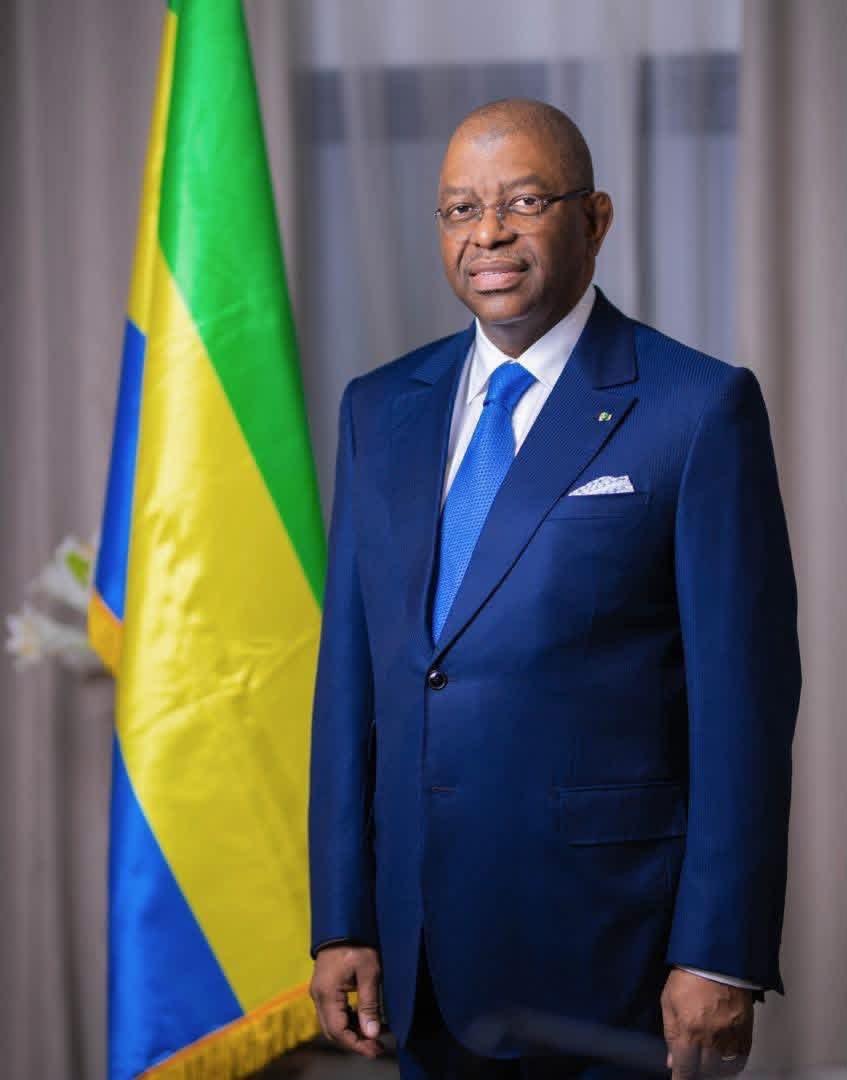
Under the High Patronage of The Vice-President of the Gabonese Republic, His Excellency Alexandre BARRO CHAMBRIER.

Theme

Insolvency: the early signs of a revolution

24 days to go

Libreville International University – Berthe & Jean

The world is changing. So is insolvency law.

Long seen as the final stage of economic failure, insolvency has become a key tool for preserving value, protecting jobs, and ensuring business continuity.

Across Africa and Europe, successive crises, technological shifts, geopolitical tensions, and new investor demands are forcing a rethink of the traditional mechanisms for handling corporate distress.

The conference will examine these questions with a clean slate, confronting African and European experiences on equal footing — a quiet, mutually beneficial revolution, built through dialogue, not a pamphlet.

Insolvency is to the economy and the law what politics is to society: everyone talks about it, almost everyone has an opinion on it, yet the assumptions underlying those opinions are rarely traced back to first principles and tested, let alone questioned.

Mr Werner Derijcke, Chair of the Scientific Committee
View of Libreville's seafront from a building, with its palm trees and beach.

A unique encounter between Africa and Europe

In Libreville, Africans and Europeans will come together to return to the fundamental principles of insolvency law. Far from inherited solutions and habitually repeated mechanisms, this conference aims to re-examine the very foundations of our legal and economic systems.

Africa is the natural setting for this exercise: the OHADA member states have already undergone an ambitious legal reconstruction. Europe, rich in a long legal tradition, brings the experience of proven systems now confronted with the need to reinvent themselves in the face of contemporary economic change.

The meeting of these two experiences opens an exceptional space for reflection, where neither old certainties nor ready-made solutions will be regarded as untouchable.

A twofold ambition

  • Question the foundations of insolvency law, not as a mere set of technical rules, but as an economic instrument, a regulatory tool, a prevention mechanism and a vector for the recovery of businesses in difficulty.

  • Foster a structured dialogue between Africa and Europe. OHADA and European systems share convergences, divergences and common challenges: comparing them enriches practice, identifies the limits of current models and explores avenues for reform.

The Conference Proceedings

The speakers' contributions will form the basis of a reference publication bringing together:

  • Scientific analyses
  • Strategic recommendations
  • Comparative perspectives
  • Reform proposals

This document will serve as a lasting resource for practitioners, researchers, public institutions and investors.

The "Best Summary Report Award"

Reserved for participating students, this Award will recognise the best summary reports written following the conference.

This distinction aims to encourage quality of analysis, critical thinking, and the ability to faithfully capture the key lessons, debates and recommendations arising from the work of the Africa–Europe International Conference on Insolvency.

The organisers

Fonds Scientifique Jean Bastin (FSJB)

Founded in the 1990s by Jean Bastin, a major figure in credit insurance and a recognised theorist of the discipline, the fund conducts research and shares knowledge on credit, financial risk and economic protection mechanisms.

Semen Africa Consulting

An African economic intelligence firm founded in 2020 in Casablanca (Morocco), dedicated to promoting investment in Africa through risk and opportunity analysis and strategic support for public and private actors.

Libreville International University – Berthe & Jean (UIL-BJ)

A Gabonese academic institution co-founded in 2013 by Dr Marie-Madeleine Mborantsuo, driven by the vision of Dr Carles Luce Donald Kambangoye, co-founder and promoter. It hosts the conference.

Africa–Europe stakes

Africa and Europe face converging challenges:

  • Fragility of state-owned enterprises
  • Industrial restructuring
  • Macroeconomic tensions
  • Technological transformations
  • Modernising legal frameworks

Insolvency also reveals deeper shifts:

  • The evolution of value chains
  • The reshaping of strategic sectors
  • Weak signals of institutional fragility
  • Emerging investor behaviours
  • Systemic risks linked to economic transitions

Speakers

See all speakers

Target audience

  • Research & teaching

    Teacher-researchers in Law, Finance and Economics

  • Justice

    Magistrates specialising in commercial and criminal matters

  • Legal practice

    Seasoned practitioners: receivers, liquidators, lawyers, judicial administrators

  • Economics & restructuring

    Economists and restructuring experts

  • Business

    Public and private company executives

  • Institutions

    Institutional decision-makers